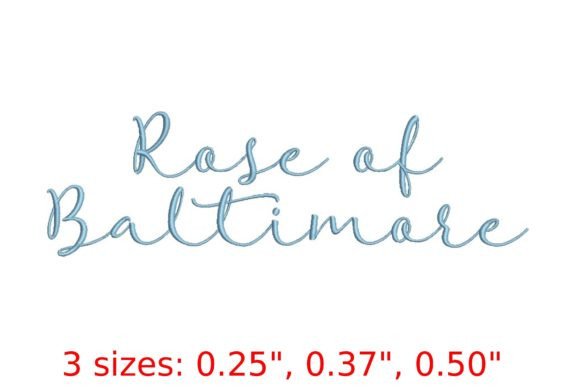
Rose of Baltimore Embroidery Font
A Delicate Script for Timeless Projects
The first thing that strikes me about the Rose of Baltimore Embroidery Font is its quiet elegance. It feels like a whisper of vintage calligraphy, with each letter flowing in a way that suggests both care and craftsmanship. The font carries a soft, romantic mood that’s perfect for projects where subtlety meets sophistication. It’s not overly ornate, but it does have enough detail to make each character feel intentional.
Where This Font Fits Best
This font is ideal for projects that lean into a classic or refined aesthetic. Think personalized gifts, custom apparel, and boutique branding. A rose motif is inherently romantic, so pairing it with something like a baby blanket or a holiday gift makes sense. I can see it working beautifully on a tote bag design, adding a touch of whimsy without overwhelming the piece.
For example, if I were preparing a custom embroidered sweatshirt for a client who wanted a subtle yet memorable design, the Rose of Baltimore Embroidery Font would be a great choice. It adds a personal flair without being too bold, making it suitable for both casual and more formal settings.
Real-World Testing: What to Expect
When testing the font on scrap fabric, I noticed that the flow of the letters is smooth but not overly intricate. The stitch density is moderate, which means it won’t overwhelm the fabric but still maintains a level of detail that feels purposeful. However, this also means that on smaller hoop sizes, some of the finer details might get lost.
I recommend checking the embroidery file before committing to a large project. Ensure that the stitch density is appropriate for the intended use. For instance, using this font on a baby item like a onesie or a cap could require careful attention to how the design translates when stitched on thin or stretchy fabric.
Considerations for Different Fabric Types
The Rose of Baltimore Embroidery Font performs best on medium-weight fabrics like cotton or linen. On textured fabrics, the design may look slightly different due to how the stitches interact with the surface. Dark fabrics can also pose challenges, as the contrast between the thread color and the background might not be as strong.
If you're planning to use this font on a curved surface like a cap or a hat, be mindful of how the design flows around the curve. Some corners might become less defined, especially if the hoop size isn’t properly chosen. Always test the design on a small area first to ensure it looks as expected in the final product.
Practical Design Notes for Success
Before using the Rose of Baltimore Embroidery Font in a real project, there are several practical steps to consider. First, always test the design on scrap fabric. This helps identify any potential issues with stitch density or placement. Second, check the thread color contrast against the fabric. A light-colored thread on a dark fabric might not be as effective.
Using the right stabilizer is crucial, especially for delicate designs. A lightweight stabilizer can help maintain the shape of the embroidery and prevent puckering. Additionally, consider creating printable mockups to visualize how the design will look on different backgrounds. This is particularly useful for Etsy sellers and craft business owners looking to present their products professionally.
Enhancing Product Value and Customer Trust
The visual appeal of the Rose of Baltimore Embroidery Font can significantly impact the perceived value of a handmade product. When customers see a well-executed design, they’re more likely to trust the quality of the work. This is especially important for small shop products and boutique branding, where first impressions matter.
For personalized gifts, the font adds a layer of thoughtfulness that can make the item stand out. Whether it's a custom embroidered patch or a holiday gift, the right design can elevate the overall experience. However, consistency in brand identity is key—using this font across multiple products helps reinforce recognition and professionalism.
Final Thoughts on Real Use
The Rose of Baltimore Embroidery Font is a versatile and elegant choice for designers looking to add a touch of vintage charm to their projects. While it has its limitations—particularly on small hoops or dense fabric—it offers a lot of potential when used appropriately. As an experienced designer, I would recommend using this font for projects that benefit from a subtle, refined look.
Always confirm licensing terms before selling finished items or digital products. And remember, no design is perfect without testing. Take the time to evaluate how the font performs in different scenarios, and you’ll be well on your way to creating beautiful, meaningful embroidery projects.